
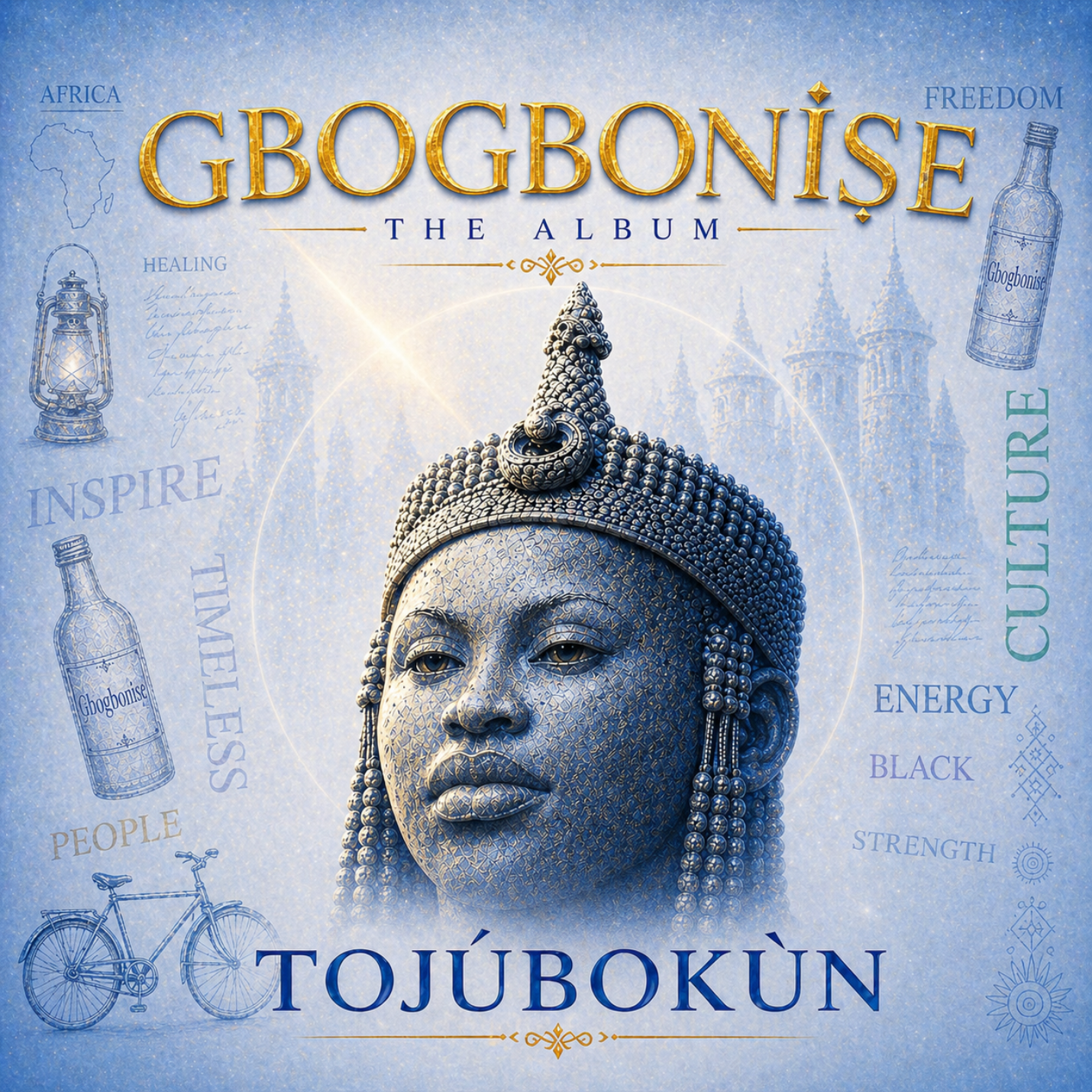
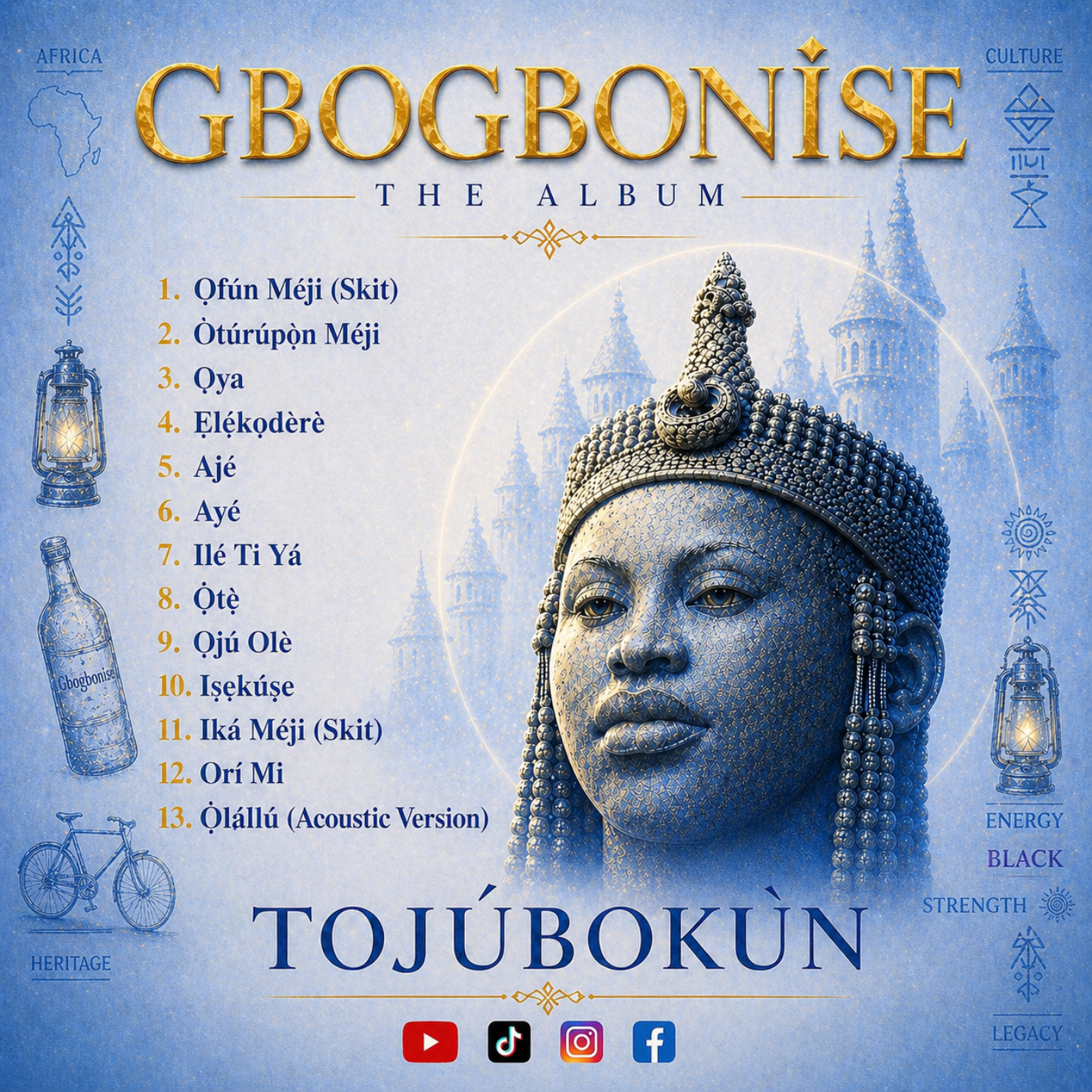
This album carries one through a journey that begins with ancestral veneration and some affirmations and declarations. Then it moves to consider going back home to work on our communities and our land. Upon taking you back home, this album now forces you to look at the societal issues within our communities and how we can do better so we can leave a better world for our children. From here, it takes us to the family and how we treat each other and what we must do to keep our families together in love and unity. Then it takes you on an individual journey and shows how a person uses affirmations to manifest good fortune for themselves despite the bad things spreading about them. Eventually, it brings you back to remember Alájoké The EP with the final song but in an acoustic version. The Album is a soul journey that brings us to reflect on our way of life and how we can make it better.
- Ofun meji: this is the ifa Verse where I got my new name from. It talks about Tojúbokùn, who is the wealth of the nation, and how they cannot survive without Tojúbokùn. We all need wealth (Ajé) to survive. By the way, wealth in this context is not limited to money. It’s culture, language, fashion, art, music, food, and everything that represents the Yorùbá people.
- Òtúrúpọ̀n Méjì: This is also a Verse from Ifá; the verse talks about paying homage to the ancestors and asking them to accept the veneration even though the person venerating them wasn’t sure how to do it because his parents died before they could show him how to do it, but because he had paid homage, his offering was accepted. So I was inspired to make it into a song that asks the ancestors (ara ọrùn) to come help us fix the land, as we’ve lost our way and no longer remember who we are. This song calls on the spirits of the ancestors to come help us with the land (Society) to make it better because we have forgotten how to do so.
- Oya: was inspired by the praise poetry of Ọya. We call it “oríkì,” and it’s a very common tradition in Yorùbá culture. Oríkì describes a person’s identity; it includes their achievements and their contributions to the society and mostly contains their history. Ọya is a fascinating character in Yorùbá cosmology because she was a woman who had the energy of the wind. She was very powerful, yet she found love with Oranfe (who people mistake for Sàngó.) So Ọya is the story of a powerful woman who could control the wind (afẹ́fẹ́); she loved kola nut, osùn, and aró (blue dye), I think 🤔. She also loved to be in the Bàtá shop, or you’d find her with her lover, Oranfe, who was very much captivated by her aura. So in essence, Ọya is oríkì (praise poetry) that turned into a song.
- Elekodere: this is also inspired by the Ifá corpus. It’s about a woman (ẹlẹkọ Idèrè), an ẹkọ seller, who went to seek the help of ifá because she wasn’t doing too well financially. Ifá indeed helped her, and she became so successful that everyone could see her looking better than she did before. However, anytime the babalawo followed up with her and asked how it was going, she would say things were still the same. So the ifa Verse literally asks us to stop lying. When Ifá has helped you, don’t go about claiming otherwise. It happens a lot in our society today. People visit the traditionalists for help, but when the help arrives, they go give thanks in church instead of where the help came from. So that’s the inspiration behind the song.
- Ajé: this is a song about the energy of wealth. We all need wealth in our lives, so this song is just about manifesting Ajé (wealth) in our lives.
- Ayé: This song makes an attempt to correct the demonization of the mothers (iyami); the power they have was given to them by the creator, and we cannot fight them, but instead we must appease them so we can have them on our side. We cannot fight Ayé and win; we can only appease them. It’s the way the creator made it to be.
- Ilé tí ya: A call to return home! Many of us have run to the diaspora for greener pastures, abandoning our land because we have lost faith in it. In reality, a people who do not own their ancestral land become wanderers. A foreign land can never be your home. You are spiritually tied to your ancestral land, and once you lose that, you have lost the essence of who you are. There are many people who want your land that you’re running away from. If you lose it, what will your children inherit? They become slaves because if they don’t own their ancestral land, they own nothing. So we must go back home to go fight for our home and fix it before it’s too late. Our ancestors left it for us to inherit, what are we going to leave for our descendants?
- Ọtẹ: Now that we’ve come home, we start with how we treat ourselves; this is either conspiracy or betrayal. The way we plan to do things collectively, and then one of us goes behind to go cut a deal that benefits only them. This song let us know that if we don’t change that culture, foreigners will end up ruling over us because betrayal will never take us anywhere but to our destruction.
- Ojú olè: so this song is about how our society has deteriorated so badly that we now encourage people to do whatever in the name of becoming rich. We don’t question our children who have no real jobs but bring money home; we hail our politicians even though we know they’re stealing our collective resources for themselves. We turn a blind eye to people using other people for money rituals and hail them once they become rich. Then we have those who take advantage of others, overcharging them or extorting their absence. The song asks us to do better and get rid of the rot in our communities.
- Ìṣekúṣe: Now that we’ve journeyed through our societal issues, we now move on to the family unit. “Ìṣekúṣe” is a cry from a woman to her husband who has stopped giving her attention like he used to. They no longer communicate; he no longer looks at her; he doesn’t compliment her like he used to. He hasn’t touched her in 4 years; she’s wondering if it’s because she doesn’t look good anymore after her 8 children for him. Or perhaps because she’s not from a rich family. She is complaining that if he doesn’t treat her better, he will push her into the arms of another man, which she really doesn’t want. This song was inspired by the conversation around a man who macheted his wife and killed himself because he found her on their bed with another man.
- Ìkà méjì: This is a recitation from one of the ifa Verses that inspired ori mi.
- Orí mi: Now this talks about an individual who hears people talking bad about them; people keep backbiting them, so this song uses affirmations from Ifá to say they will never be unfortunate. My ori will never be unfortunate. This is inspired by a true story.
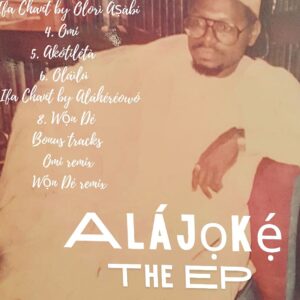
- Ọlailu is an acoustic version of a song from my debut. EP self-titled Alájoké. It’s a song letting people know that Èṣù is not Satan, not by a long shot. They do not have the same history, and Èṣù is a messenger of Olódùmarè and not an enemy.
Thank you for taking this incredible journey with me. 🥰
Hope you do enjoy it
Reviews
There are no reviews yet.